
Ayurveda Autumn Recipe: Pumpkin and Lentil Soup for Gut Health and Vata Balance🍲😋
There is a particular quality to the air in Perth in autumn. The brutal edge of summer finally softens. The mornings carry a coolness that wasn't there a week ago. The light shifts — golden, lower, gentler. And if you pay close attention, something in your body shifts with it.
This is not imagination. It is physiology. And Ayurveda has understood it for thousands of years.

Why Autumn Asks Something Different of Your Gut
In Ayurveda, the year moves through seasonal rhythms that correspond to the three doshas — the constitutional energies that govern how our bodies function. Autumn in Australia, falling across March, April, and May, is the season of Vata dosha — the energy of air and space, movement and change.
Vata is characterised by qualities that mirror the season itself: dry, light, cool, irregular, and mobile. When Vata is in balance, it expresses as creativity, enthusiasm, and mental clarity. When it becomes aggravated — as it naturally tends to during the autumn transition — it manifests as dryness (in the skin, the gut, the joints), irregular digestion, bloating, gas, constipation, disturbed sleep, anxiety, and a feeling of being ungrounded or scattered.
Sound familiar? These are among the most common symptoms my Perth clients describe in the autumn months — and they're often dismissed as unrelated, or attributed to stress, or managed with supplements, when in reality they're the body's entirely predictable response to a seasonal shift that most of us are not consciously supporting.
The Ayurvedic answer is both simple and deeply satisfying: eat warm, moist, grounding, well-spiced food. Food that directly counteracts the qualities of Vata excess. Food that is the dietary equivalent of wrapping yourself in something warm.
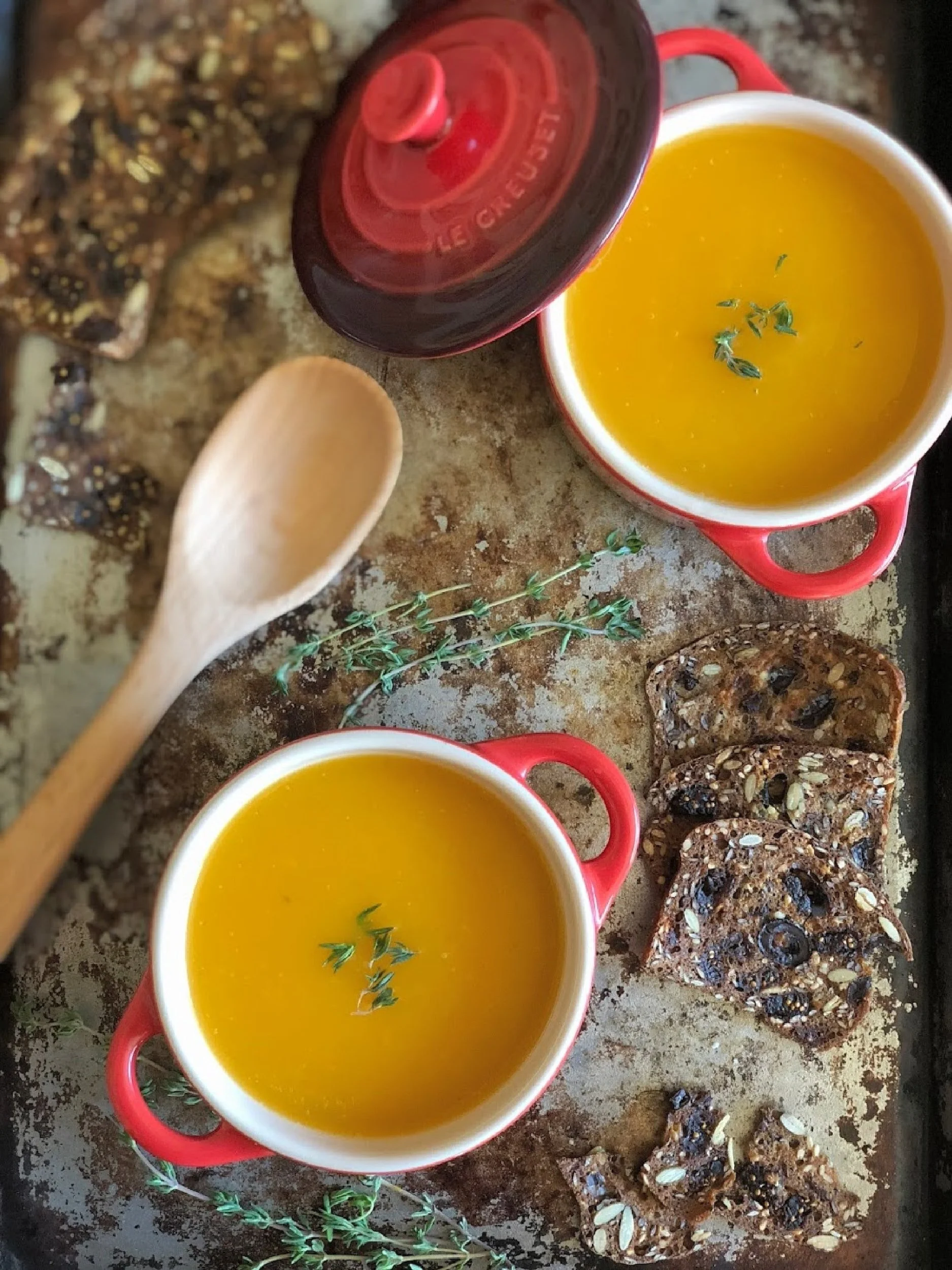
This pumpkin and lentil soup is exactly that.
Why This Soup Is Genuinely Therapeutic — Not Just Comforting
Before we get to the recipe, it is worth understanding why each key ingredient has earned its place here. This is not a generic warming soup with an Ayurvedic label applied. Every element is doing specific work.
Pumpkin is one of the most Vata-pacifying vegetables available. It is sweet, dense, and moist — the direct opposite of Vata's dry, light qualities. It is also deeply nourishing for the gut lining, providing soluble fibre that feeds beneficial gut bacteria and supports the intestinal environment. For clients presenting with bloating, irregular digestion, or the kind of unsettled gut that worsens in cooler months, pumpkin is one of the first foods I reach for. One important distinction worth knowing: not all pumpkins are equal for sensitive digestive systems. Japanese (Kent) pumpkin is significantly lower in fermentable carbohydrates than butternut pumpkin, which can be problematic for those managing FODMAP sensitivities at larger serving sizes. For most people either variety works beautifully in this recipe — but if your gut tends toward reactivity, Japanese pumpkin is the better choice here.
Red lentils provide grounding protein and complex carbohydrates that stabilise energy and satisfy deeply — again, directly countering the irregularity and instability of elevated Vata. They are easier to digest than most legumes, particularly when cooked to softness with spices that support digestive fire. The combination of pumpkin and lentil creates a complete, sustaining meal that the digestive system can process efficiently without creating the heaviness of heavier proteins.
Ghee is one of Ayurveda's most valued foods, and its inclusion here is deliberate. Ghee lubricates the digestive tract, kindles agni (digestive fire), carries the medicinal properties of spices deeper into the tissues, and directly counteracts the dryness that is the hallmark of Vata excess. If you have access to good quality ghee, use it here rather than substituting. The difference is noticeable both in flavour and in how the soup feels in the body.
Turmeric is the most researched anti-inflammatory food compound available. Curcumin, its active constituent, has been shown to support gut lining integrity, reduce intestinal inflammation, and modulate the gut microbiome. In Ayurveda it is understood as a blood purifier and digestive tonic — warming, clearing, and deeply supportive of agni. Combined with the fat in ghee or coconut oil, its absorption is significantly enhanced.
Ginger is perhaps Ayurveda's most versatile digestive herb. Fresh ginger in particular stimulates digestive enzymes, reduces nausea and bloating, warms the digestive tract, and supports the efficient movement of food through the gut. For anyone dealing with the sluggish digestion, gas, or constipation that often accompanies Vata season, ginger is one of the most effective and accessible interventions available.
Cumin and coriander together are a classic Ayurvedic digestive combination — carminative (gas-relieving), anti-inflammatory, and warming without being excessively heating. They reduce the Vata tendency toward gas and bloating specifically, and make this soup genuinely therapeutic for the digestive system rather than simply pleasant to eat.
The Recipe
Serves 4 | Preparation time: 15 minutes | Cooking time: 30 minutes
Ingredients:
1 small Japanese (Kent) pumpkin (approximately 800g), peeled and chopped into 3cm pieces — see note on pumpkin variety below
1 cup red lentils, rinsed thoroughly under cold water
1 medium onion, diced
3 cloves garlic, minced
1 teaspoon ground cumin
1 teaspoon ground coriander
1 teaspoon ground turmeric
1 teaspoon fresh ginger, grated (or half teaspoon ground)
4 cups good quality vegetable broth
1 tablespoon ghee (preferred) or coconut oil
Salt to taste
Fresh cracked black pepper to taste
Optional garnishes:
A small swirl of coconut cream
Fresh coriander leaves
A pinch of cumin seeds toasted briefly in ghee
A squeeze of lime
A Note for Sensitive Digestive Systems
If you are managing gut sensitivity or have been advised to follow a low FODMAP approach, a few small adjustments make this soup significantly more digestible without compromising its Ayurvedic intent.
Pumpkin variety matters. As noted above, Japanese (Kent) pumpkin is considerably lower in fermentable carbohydrates than butternut and is better tolerated by most sensitive digestive systems. Stick to moderate serving sizes initially and observe your response.
Rinse the lentils thoroughly and ensure they are cooked until completely soft and dissolved into the soup. Undercooked lentils are considerably more gas-producing than fully cooked ones. If your gut is particularly reactive, soaking the lentils for a few hours prior to washing and cooking, then discarding the water during the cooking process after the first boil, can reduce the FODMAP load further.
Garlic and onion are among the highest FODMAP ingredients in this recipe. For those who are highly sensitive, replacing them with the green tops of spring onions only (the green part is low FODMAP while the white bulb is not) and garlic-infused oil rather than raw garlic cloves preserves the flavour profile while significantly reducing fermentable carbohydrates.
These adjustments keep the warming, grounding, Vata-pacifying qualities of the soup fully intact. They simply make it accessible to a wider range of digestive constitutions which is entirely in the spirit of Ayurveda's individualised approach to food.
Method
Build the base slowly. Heat ghee or coconut oil in a heavy-based pot over medium-low heat. Add the diced onion and allow it to soften gently for 5 to 7 minutes — do not rush this step on high heat. Slow-cooked onion creates a sweeter, more digestible base and prevents the sharp, gas-producing qualities that quickly fried onion can produce. Add the garlic and cook for a further 2 minutes.
Bloom the spices. Add the cumin, coriander, turmeric, and fresh ginger to the pot and stir through the onion and garlic for approximately one minute. This step is important — dry spices bloom in fat and heat, releasing their volatile oils and making them significantly more bioavailable. The kitchen will smell extraordinary at this point.
Add the main ingredients. Add the chopped pumpkin, rinsed red lentils, and vegetable broth. Stir to combine. Bring to a gentle boil, then reduce to a steady simmer.
Cook until completely soft. Simmer for 25 to 30 minutes until both pumpkin and lentils are completely soft and beginning to break down. If using a pressure cooker, 10 to 12 minutes on high pressure achieves the same result. The lentils should be fully dissolved into the soup — no firmness remaining.
Blend and season. Use an immersion blender to blend the soup until completely smooth. Season with salt and fresh black pepper. Taste and adjust — if it needs more warmth, a small additional pinch of ginger. If it feels too thick, add a splash more warm broth.
Serve with intention. Ladle into warmed bowls. Add optional garnishes if using. Sit down. No screens. Eat slowly and with awareness — this is part of the medicine.
A Note on Eating This Soup Well
The recipe is half the work. The other half is the conditions in which you eat it.
Ayurveda teaches that the same food eaten in a calm, present, unhurried state nourishes differently than the same food eaten distracted, rushed, or stressed. This is not philosophy — it reflects real differences in digestive enzyme activity, gut motility, and nervous system state that influence how efficiently your body extracts nourishment from what you eat.
This soup, eaten sitting down, warm, with no phone in hand, on a cool autumn evening — is a genuinely different physiological experience than the same soup eaten at a desk between emails. I'd encourage you to try it the Ayurvedic way at least once and notice the difference in how you feel an hour later. If the idea of screen-free eating is new to you, you might enjoy reading about how I approach it here.
Adapting for Your Constitution
This recipe is primarily designed to balance Vata dosha, making it ideal for the autumn transition and for anyone with a naturally Vata-dominant constitution. A few simple adjustments tailor it for other constitutions:
For Pitta types (tend toward heat, inflammation, sharp digestion): reduce or omit the ginger, use coconut oil rather than ghee, and add a small swirl of coconut cream to cool the soup slightly. Fresh coriander garnish is particularly beneficial.
For Kapha types (tend toward heaviness, sluggishness, congestion): increase the ginger and black pepper, reduce the lentil quantity slightly, and add a pinch of chilli or mustard seeds bloomed in the ghee at the start. Kapha types benefit from a lighter, spicier version that stimulates rather than grounds.
If you are unsure of your constitution, this is one of the most valuable things an initial Ayurvedic consultation can establish — and it changes how you approach food, routine, and lifestyle in ways that tend to be immediately noticeable.
Make It a Habit, Not Just a Recipe
One of the most consistent patterns I observe in practice is that clients who begin cooking seasonally (eating in alignment with what the season asks of their bodies) notice improvements in digestion, energy, and overall wellbeing that dietary changes alone, without seasonal awareness, don't fully produce.
This soup is a practical entry point into that practice. Make it on a Sunday afternoon. Make enough for the week. Warm it gently before eating — never microwave Ayurvedic food if you can avoid it, as the rapid uneven heating disrupts the energetic integrity of the spices. Eat it for lunch or as an early dinner, when digestive fire is still adequately present to process it well.
"She has shown me it is not all about following a strict diet, but how small, consistent changes are the ones that make the most impact."
- client spotlight from my Google Reviews
Small, consistent, seasonal. That is the Ayurvedic way.
Want to Go Deeper?
If this recipe has sparked curiosity about how Ayurveda approaches food, seasonal eating, and digestive health more broadly, there is much more to explore. Understanding your individual constitution — your unique dosha combination — is the foundation of eating in a way that genuinely supports your specific body rather than following a universal prescription.
You can read more about how meal timing and eating rhythm affect gut health and overall energy here, and about the connection between nervous system state and digestion here.
If you are based in Perth or anywhere in Australia and would like to explore what an Ayurvedic consultation could offer your own health, I would love to hear from you. You can find out more about what an initial consultation involves on my appointments page.
Warm wishes and warm soup!
With gratitude
Priya Birdi