
Cinnamon in Ayurveda — A Spice for Gut Health, Blood Sugar Balance and Winter Warmth🪵
If there is one spice I reach for more than almost any other in the cooler months, it is cinnamon.
Not because it is fashionable, or because a wellness influencer told me to put it in my coffee. Because it works. Because after thousands of years of use in Ayurvedic medicine and, increasingly, a substantial body of modern research, cinnamon has earned its place as one of the most genuinely useful spices in the kitchen and the clinic.
Let me tell you what I know about it, and why I think it deserves more than a dusting over your morning oats.

What Ayurveda Says About Cinnamon
In Ayurveda, cinnamon is known as Tvak and has been used for centuries as a warming digestive herb, a circulatory tonic, and a rejuvenating spice with broad application across all three doshas. Its primary qualities are warm, dry, light, and penetrating — making it particularly valuable in Kapha and Vata seasons, when the body tends toward heaviness, sluggishness, cold, and digestive dampness.
Cinnamon is considered tridoshic in appropriate quantities — meaning it can benefit all three constitutional types, with some care around excess in high-Pitta individuals, as its warming nature can occasionally fan inflammatory conditions when used in very large amounts.
Its primary Ayurvedic applications are digestive support, respiratory health, circulation, and blood sugar regulation — areas where modern research has now substantially confirmed what traditional medicine observed empirically over centuries.
What the Research Supports
Digestive health. Cinnamon has well-documented carminative properties — it reduces gas, bloating, and digestive cramping, and supports the efficient movement of food through the gut. Its antimicrobial properties help maintain a balanced gut environment, and it has shown activity against several of the bacterial overgrowth patterns that contribute to digestive dysfunction. For clients presenting with bloating, irregular digestion, or that uncomfortable heaviness after meals, cinnamon is one of the first spices I recommend incorporating consistently.
Blood sugar regulation. This is perhaps cinnamon's most researched modern application. Compounds in cinnamon, particularly cinnamaldehyde and various polyphenols, have been shown to improve insulin sensitivity and support more stable blood glucose levels after meals. For anyone experiencing the mid-morning energy crash, persistent sugar cravings, or the kind of fatigue that follows a carbohydrate-heavy meal, consistent use of cinnamon is a genuinely useful dietary adjustment. This matters for gut health too — unstable blood sugar patterns are a significant driver of gut microbiome disruption over time.
Circulation and warmth. Cinnamon has a mild but real vasodilatory effect, improving circulation to the extremities. In Perth winters, when hands and feet run cold and the body is asking for warmth, this is a directly useful quality. In Ayurveda, poor circulation is understood as a contributing factor in a range of chronic conditions — cold extremities, foggy thinking, slow digestion — and cinnamon's warming effect on the circulatory system is one of the reasons it features so prominently in winter preparations.
Antimicrobial and immune support. Cinnamon's antioxidant content is genuinely impressive — it consistently ranks among the highest of any spice tested. Its antimicrobial properties extend to the respiratory tract, which is why traditional medicine across cultures uses cinnamon in warming teas and broths during cold and flu season. This isn't folk medicine being romanticised — it reflects real antimicrobial activity documented in laboratory research.
A Note on Cinnamon Types
Not all cinnamon is equal, and this distinction matters if you are using it therapeutically rather than just for flavour.

Ceylon cinnamon (Cinnamomum verum)
Sometimes called true cinnamon, is what Ayurveda primarily references and what most quality health food stores stock. It is lighter in colour, more delicate in flavour, and lower in coumarin — a compound that in very large amounts can stress the liver.
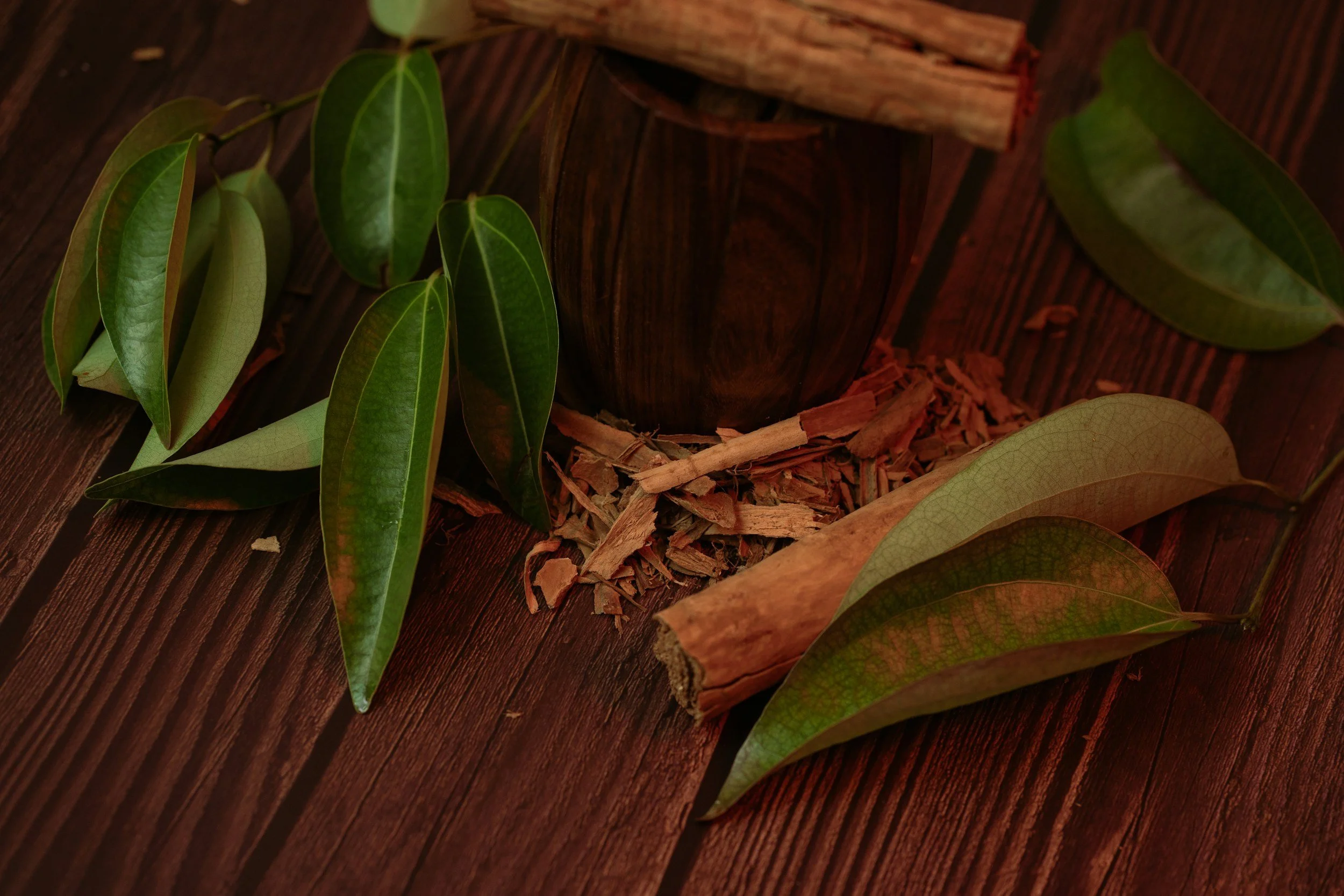
Cassia (Cinnamomum cassia)
This is the more widely available supermarket variety — darker, more pungent, and higher in coumarin. Small quantities in occasional culinary use is perfectly fine, but for anyone using cinnamon as a consistent therapeutic spice, Ceylon is the preferable choice.
If the jar simply says "cinnamon" without specifying variety, it is almost certainly cassia. Worth knowing.
How to Use It Daily
The most consistently effective way to use cinnamon is simply to make it a daily kitchen habit rather than an occasional addition. A few practical suggestions:
In warm breakfast porridge, stirred through as the grain warms — particularly the Ayurvedic winter porridge recipe that features it as a core ingredient.
In warm water or herbal tea — a small piece of cinnamon stick simmered in water for 5 to 10 minutes makes a simple, warming digestive tea that is particularly useful after a heavier meal or during Kapha season.
A pinch in warm milk before bed — a classic Ayurvedic preparation, particularly supportive of sleep and digestive settling in the evening.
Stirred into warm cooked fruits, particularly apple and pear, which are themselves Vata and Kapha-pacifying in cooler months.
One important note that is worth repeating: do not add cinnamon to very hot food or drink and then immediately consume it expecting to preserve all its medicinal properties. The volatile oils that carry much of its therapeutic activity are sensitive to sustained high heat. Add it toward the end of cooking or warming rather than at the beginning where possible.
And the Ayurvedic guidance on honey applies here too — if combining cinnamon with honey, neither should be heated. Both are best added to warm rather than hot preparations.
Who Benefits Most
Cinnamon is particularly well suited to:
People dealing with sluggish digestion, bloating, or post-meal heaviness. People with cold constitutions, cold extremities, or a tendency toward fatigue in cooler weather. Those managing blood sugar instability, sugar cravings, or the energy patterns associated with insulin sensitivity concerns. Anyone who finds their digestion worsens in winter — cinnamon is one of the most direct and accessible Kapha-season digestive supports available.
Those with strong Pitta constitutions, who tend toward heat, inflammation, and intensity, should use cinnamon in moderation rather than generously. If you find warming spices tend to aggravate your symptoms rather than soothe them, that is useful constitutional information worth exploring.
That shift from generic advice to constitutional specificity is exactly what Ayurveda offers — and cinnamon is a small but genuine example of it.
One Spice, Many Applications
Cinnamon is a good entry point into Ayurvedic nutrition precisely because it is accessible, familiar, inexpensive, and effective. It sits on almost every kitchen shelf already. The difference is using it with understanding rather than habit.
If the idea of adjusting your diet and spice use to work with your specific constitution and the current season is one you'd like to explore in more depth, this is exactly the kind of practical, personalised guidance an initial consultation can offer. You can read more about what that involves on my appointments page.
You can also read about fennel — another extraordinarily versatile Ayurvedic digestive spice — in the companion article here.
With gratitude
Priya